
San Diego dating has a map: a match in North County, central neighborhoods, or the South Bay can mean very different weeknight plans. For local Black singles dating in San Diego, combine community-facing spaces with a wider search, then use early conversation to find out who fits your life. Shared context can open a door; compatibility decides whether it stays open.
Published by Kindred Signal
Local connection can begin in more than one kind of space

An app reaches people outside your immediate circle and lets you state relationship intentions before meeting. Community events and Black-led social, civic, or professional gatherings put people in a live setting, where conversation has something to rest on. An interest group reveals how someone spends free time; a trusted introduction brings social context but a smaller pool. In San Diego, those routes often work best as a mix, because someone near Oceanside may not casually meet a person whose routine is centered in Chula Vista.
Community context
Community-centered settings can shorten the early translation work. People may already understand cultural references, social expectations, or why certain family and professional experiences matter. That can create ease and reduce the urge to explain yourself from scratch. It cannot tell you how a person handles conflict, views commitment, practices faith, or approaches money and family obligations.
A profile that says Black, African American, Caribbean, multiracial, or diaspora affiliation gives a person a choice about visibility; it does not grant anyone permission to assign a backstory. The same applies to assumptions about hair, music, politics, neighborhood, education, or who someone considers family. A respectful match notices what a person has chosen to share and asks open questions where real differences may exist.
In San Diego, community context may come from a cultural event, a service project, a running group, a faith community, or an introduction at a dinner. The setting explains why two people crossed paths, not what they owe each other. Let the shared setting start the conversation, then leave room for a one-on-one exchange before projecting a future onto a shared identity.
Individual compatibility still requires individual questions
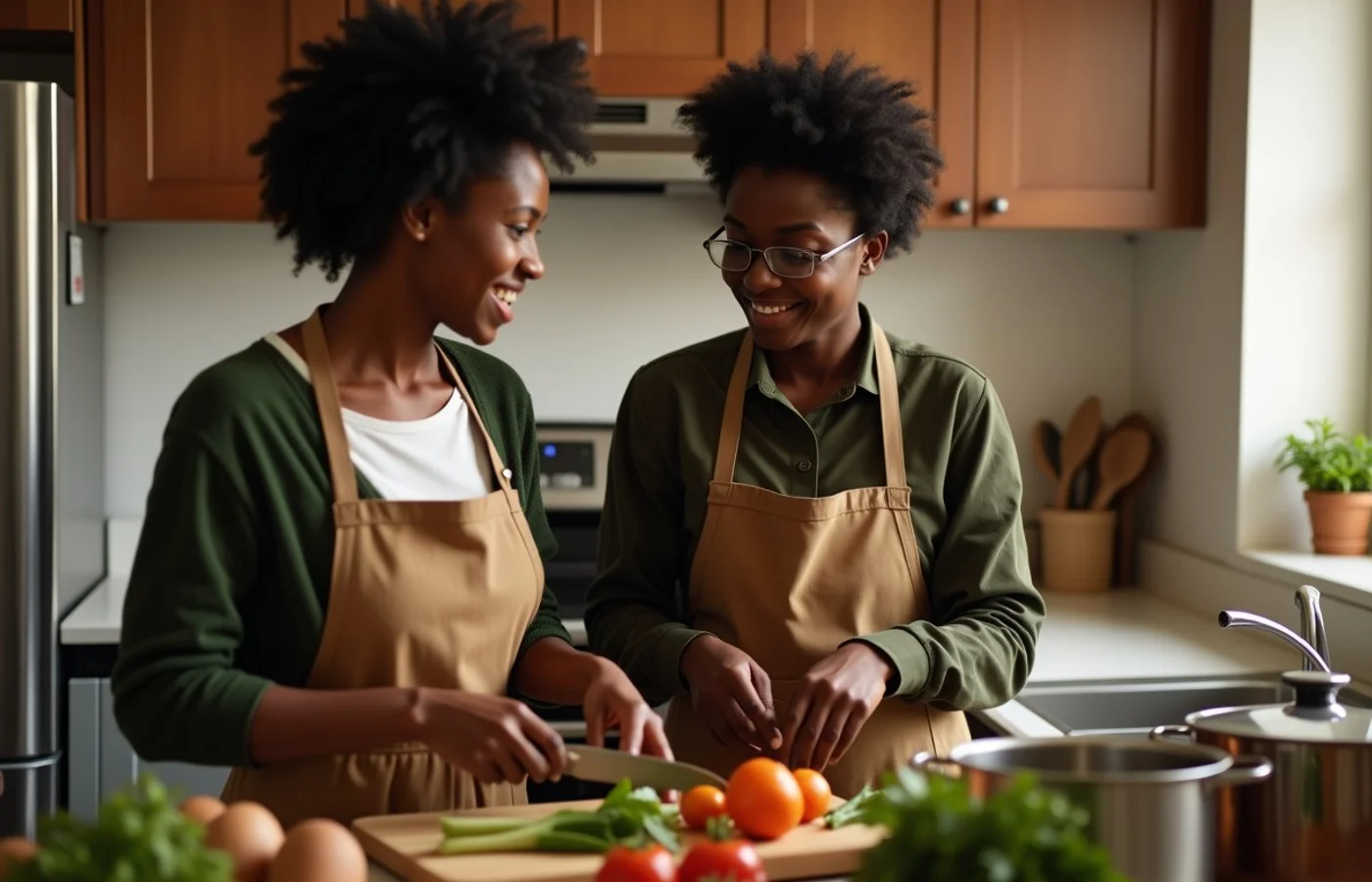
Compatibility becomes clearer when the conversation moves from a profile's facts to the shape of an ordinary week. Ask about time at home or out, the role of faith, closeness with children or extended family, political dealbreakers, communication when a plan changes, and what commitment means in practice. These are not a test administered in one long chat. Each answer can lead to the next honest question.
Relationship intent belongs in the conversation early enough to prevent a mismatch from becoming a month of texting. A person looking for marriage, a steady partnership, casual dating, or something still undefined can say so plainly: “I’m looking for a committed relationship and I’m free most weeknights—what are you hoping to build?” A match living in La Mesa and one based in Oceanside also need to compare driving tolerance, work hours, and who can travel before calling the distance manageable.
Which search route gives you enough context?
Identity-centered platforms and groups can bring more cultural relevance at the start. Their limitation is straightforward: the active pool may be narrow, and participation may not line up with the part of San Diego where you spend your time. General platforms reach across neighborhoods and nearby cities, but they put more of the sorting burden on you. A clear profile and a few early questions matter more there, because a broad search can produce plenty of interest with little shared direction.
Activity-based channels—volunteering, sports, classes, book discussions, outdoor groups, or professional circles—show an actual routine. That context supports a stronger first conversation than a gallery of photos, although joining solely to hunt for dates usually reads badly. Introductions from friends add social context; they also deserve discretion, especially when a mutual circle is small.
Choose routes based on what they reveal. Someone who values cultural connection and has a tight geographic radius may find better starting points through community-centered spaces. Someone whose work or family life spans San Diego County may need the broader reach of a general platform. Before sharing a phone number or a regular location, inspect a service's reporting, blocking, and location-privacy controls; at an in-person event, decide how you'll get home independently. The right route gives you conversation, boundaries, and a realistic path to another date.
The strongest local search is not the narrowest one. It gives you cultural room to be seen, enough reach to meet people beyond one circle, and honest information about how a connection would work.