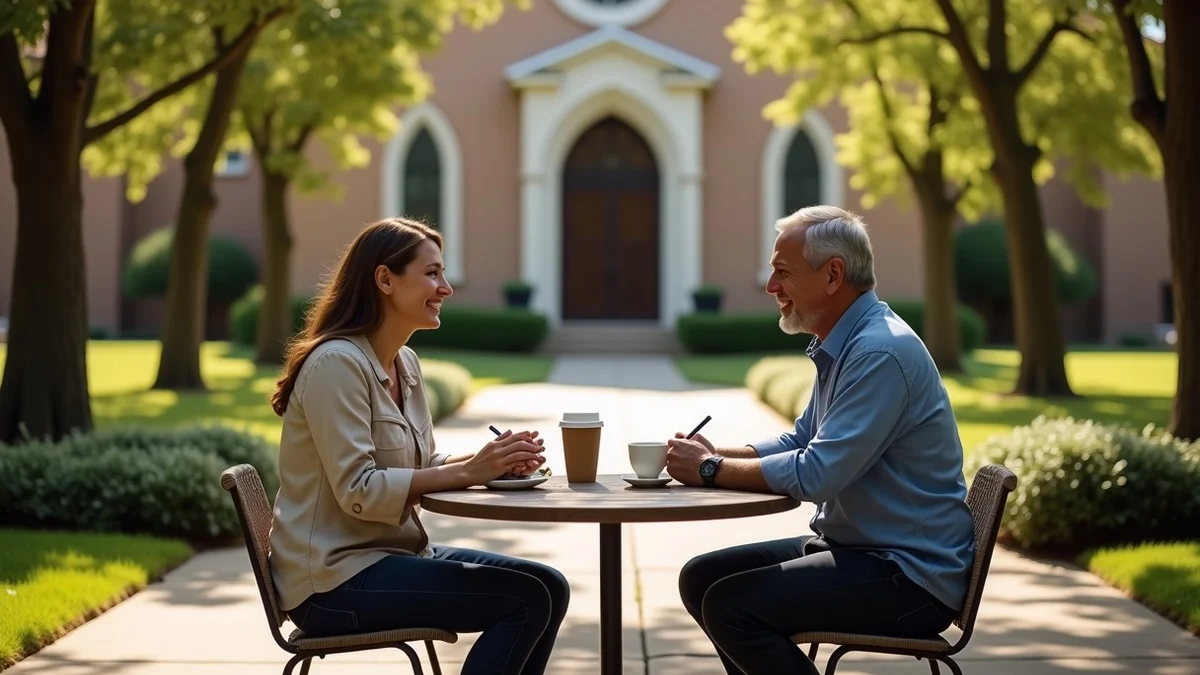
Faith matters in dating, but a Catholic badge rarely tells the whole story. Catholic singles in McKinney can start with CatholicMatch or Catholic Singles for a faith-centered pool, while Hinge, Bumble, and Match expand local options. Compare services by the Catholic life you want to share, the distance you will travel, account settings, and how clearly a match approaches marriage and family.
Published by Kindred Signal
A Catholic label can contain several dating expectations

In McKinney, profiles marked Catholic can reflect very different lives. One person strongly identifies with Catholic family and cultural traditions but does not attend regularly. Another attends Mass each week, hopes to marry in the Church, and places sacramental life at the center of a future household. A third welcomes an interfaith relationship when faith receives consideration. None is being deceptive; problems begin when the label is assumed to answer questions it cannot answer. Someone seeking a spouse who shares regular practice faces a different decision from someone who mainly wants a partner comfortable with Catholic traditions and family holidays. Describe these distinctions plainly early on, then let the other person explain their beliefs without being graded against yours. Account safety deserves equal attention. Before adding photos or connecting an account, review the app’s current options for blocking and reporting, photo access, location accuracy, and account recovery. Leave your home address, workplace details, children’s names, and regular parish schedule off a public profile. A faith-centered service still requires care when meeting strangers, and a mainstream app can support serious faith-based dating. What matters is whether the profile and conversation point to the same expectations.
When parish life and app life overlap
Parish life and dating apps create different introductions. A connection through St. Michael the Archangel Catholic Community, a young-adult gathering, or a service project begins with shared context: people have seen one another take part in a community setting before deciding if romantic interest exists. Familiarity can make an introduction easier, while a no still calls for discretion. Apps separate dating from parish life and present more possible introductions, including people outside the small weekly circle. Neither route carries more seriousness by default. One begins with context; the other builds context through a profile and conversation.
Distance settings need more thought than a default radius. Base them on places and times you actually travel, not the theoretical span of the Dallas–Fort Worth area. A technically nearby match who requires a long weekday drive will affect the relationship’s pace from the first date. Historic Downtown McKinney offers a sensible reference point for what feels local, especially when meeting after work or between existing commitments. For a first in-person meeting, meet in a public, easy-to-see place and arrange your own transportation; Towne Lake Recreation Area suits a daytime walk better than an isolated location. Parish introductions and app matches call for the same basic caution.
Profile fields for faith and future plans
Use faith and relationship fields to state facts, not to announce a test someone must pass. Describe faith’s place in your weekly life, the values that guide your choices, and the relationship direction you seek. Mention family hopes only at a level you can support now: marriage, children, blended-family life, or openness to discussing those questions. Do not turn a preference into a claim about what every Catholic should want. A concise profile gives a serious match enough to begin an honest conversation without requiring their entire spiritual history before a first date.
Faith-focused platforms or broader local reach?

| Option | Audience Starting Point | Local Reach | Messaging Access To Inspect | Risk Of Relying On The Label |
|---|---|---|---|---|
| CatholicMatch or Catholic Singles | A Catholic-focused dating setting that places faith at the front of the search. | Check how many profiles fall within a distance you would travel from McKinney; a niche pool may be thinner nearby. | Review current matching, messaging, subscription, blocking, and reporting rules before spending time on a conversation. | Shared affiliation still leaves practice, sacramental priorities, interfaith openness, and family plans unresolved. |
| Hinge, Bumble, or Match | A broader dating pool where Catholic identity needs to be stated in the profile and explored in conversation. | A wider local search can include more people around McKinney, but distance settings should reflect actual driving habits. | Compare current initiation and messaging rules, along with the account tools that let you control unwanted contact. | Faith may be absent, vague, or cultural instead of practiced, so early clarity matters more. |
Look past the badge to the daily pattern
A shared Catholic label says little about calendars, communication, or a relationship’s day-to-day shape. Compare how each person spends weekends, whether parish involvement is occasional or central, how they make time around work, and how family affects decisions. Someone who values a quiet home life, regular worship, and gradual dating may not fit with a person whose schedule and social life leave little space for those things. That reflects fit, not a judgment on either person’s faith.
Communication style belongs in the same category. Notice whether plans are made with reasonable notice, whether a person follows through on what they say, and whether the pace of messaging matches the level of interest they claim. Consistent vagueness about meeting in public, unexplained pressure to move off the app, or avoidance whenever future intentions arise warrants distance. On the other hand, a clear account of work demands, family commitments, and dating pace gives you something concrete to assess. Religious identification should inform the conversation, not replace it.
Ask about marriage, practice, and family timing
Direct questions work better than trying to infer major life decisions from a profile. Ask how Catholic practice fits into an ordinary week, what marriage means to them, and what timeline they picture for a committed relationship. Ask whether they hope to have children, are open to a blended family, or have responsibilities that affect dating time. Family influence also merits a calm discussion: some people expect close involvement from relatives, while others keep romantic decisions private. These subjects are substantial, so raise them after basic interest is established rather than treating a first exchange like an intake form. Clear answers prevent a promising McKinney connection from drifting into a mismatch neither person intended.
The strongest app choice depends on what must be shared and what can be discussed. CatholicMatch and Catholic Singles put faith in the foreground; Hinge, Bumble, and Match widen the search around McKinney. In either setting, state your practice and intentions plainly, protect personal details, and give more weight to day-to-day compatibility than to a profile badge.