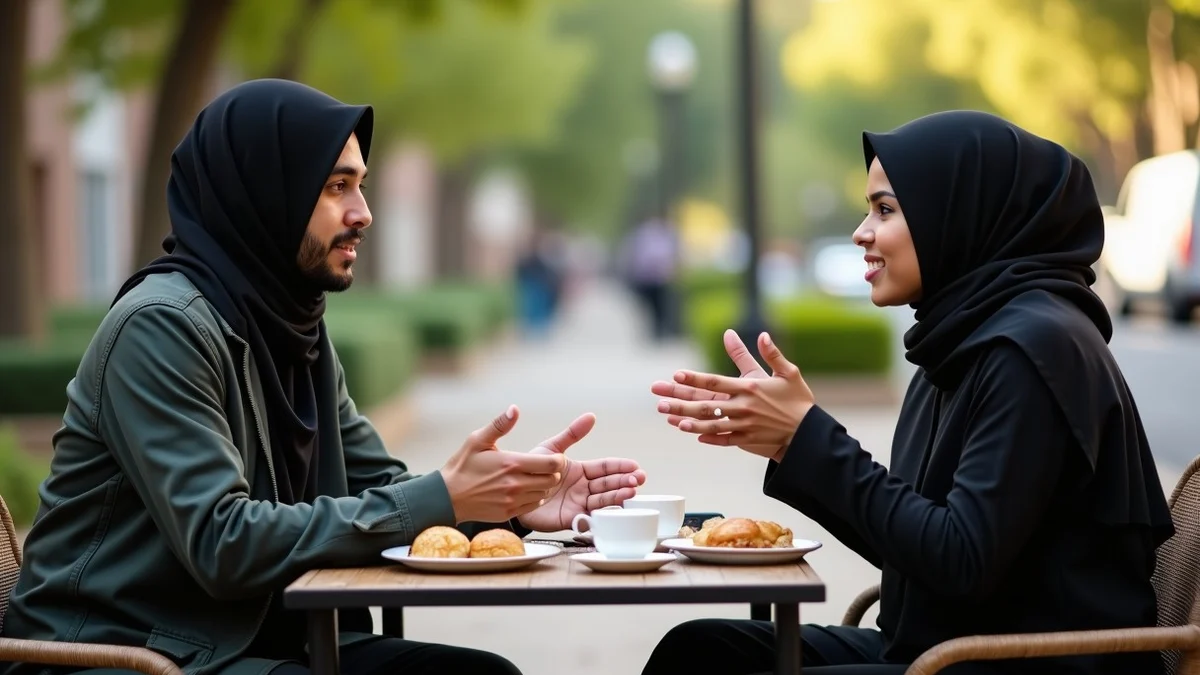
Garland dates often start with a familiar label—Muslim—but that label does not settle the terms of a relationship. Muslim singles dating in Garland works best when each person names their expectations about faith, family, communication, and commitment before chemistry carries the conversation. Garland’s reach into nearby North Texas communities offers several ways to meet, while travel plans and community overlap become part of the early calculation. There is no single courtship model to discover or perform.
Published by Kindred Signal
Muslim dating practices are not one fixed script
A faith label does not reveal how someone observes, what cultural traditions shape their family life, or what kind of partnership they seek. For one Muslim adult, religious practice determines daily routines, food choices, social settings, and the pace of dating. For another, faith is deeply important but expressed differently in everyday life. Some people expect traditional gender roles; others want shared decision-making. Some date only with marriage in view, while others need time to learn whether a relationship has real potential.
Those differences shape everyday choices in Garland: where to meet, who knows about the date, how often to communicate, and when a relationship becomes serious. Shared religion offers an important connection, but it cannot replace learning how another person actually lives. Assuming otherwise can turn a broad point of connection into avoidable strain.
Unspoken expectations create the biggest early mismatch
Early mismatch usually begins with an assumption left hanging. One person sees several dates as an exclusive courtship; another is still meeting people. One expects first meetings in a group or with a chaperone nearby; another expects one-on-one dates. Physical affection, marriage timelines, and when parents or close relatives should know about a connection also carry very different meanings.
Bring these subjects up before dating gains momentum. A difference is not automatically a dead end, but it needs a clear answer: Is this a preference, a firm limit, or a point that requires agreement between both people? That distinction prevents someone from reading patience as commitment or restraint as disinterest.
A Garland connection may involve several communities

Garland is not an isolated dating pool. A local search often crosses into Dallas, Richardson, Plano, or Mesquite, so travel time and a comfortable meeting area deserve discussion before plans become routine. Mosque and community networks often carry more social context, workplace circles bring familiar reputational ties, and general dating apps create broader introductions with fewer shared connections. Each route changes what is already known and what still needs asking. Someone who prefers a trusted introduction should state that early; a shared community does not guarantee the same expectations.
Questions that clarify faith and partnership
Use everyday language, not an interview checklist. Discuss how faith appears in a normal week, which values each person considers central to a marriage, and what family involvement feels right. Move from broad intentions to daily compatibility: preferred social settings, work schedules, money habits, children or parenting hopes, and where each person expects to live. Include the relationship timeline as well. Someone seeking marriage soon deserves the same candor as someone who wants a slower process, and neither person should have to decode that difference from profile wording alone.
Boundaries can be specific without being defensive
Your personal limits describe the conditions under which contact feels right; they are not accusations. Name messaging hours, whether late-night calls are welcome, the pace for moving from an app to a phone number, and the setting for a first meeting. Physical-contact limits belong in the conversation before an in-person date, not in the middle of a moment when one person feels cornered.
Photos and disclosure need the same openness. Decide what kinds of images are acceptable to share, whether a profile should remain available while getting acquainted, and what information may be shared with relatives, friends, or a community contact. Ask for the other person’s limits too. An early conversation about these choices exposes incompatibility and gives a considerate connection room to develop without guesswork.
Dating in Garland does not need a borrowed template, religious or otherwise. A promising connection has enough candor to show where two people align, where they differ, and whether those differences fit the partnership each person intends to build.